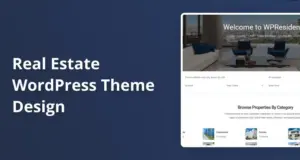
You make your small real estate portal feel as serious as Zillow or Rightmove by pairing sharp design with real search power and good speed. Start from a portal-style WPResidence demo, tighten your logo and colors, and build clear property pages that keep photos and facts on top. Then tune search, maps, and mobile layouts so visitors forget size and just notice control and comfort.
How can WPResidence help my portal visually match Zillow or Rightmove?
A modern, mobile-first layout is the fastest way to make any property portal feel professional.
The quickest path is to start from a portal-style demo in WPResidence and edit it instead of building from zero. The theme ships with over 48 one-click demos, including full portals, luxury sites, rentals, and commercial layouts, so you can pick a base close to big portals. After import, you swap your logo, brand colors, and photos so the site looks like your own work.
Under the hood, WPResidence runs on Bootstrap 5 with clean fonts and mobile-first grids, which matches how large portals design. Front-end cards, headers, and spacing look current, so if you only tweak a few options it still feels like a 2026 product. Property cards are flexible: you can pick full-width or grid styles and choose which details show at a glance or on hover.
To copy the “big portal” feeling on property pages, you use the Studio builder or Elementor widgets to design custom templates. That lets you place a large gallery on top, then price and summary facts, and then details and maps below, all without code. Because WPResidence lets you pick gallery types, you can set full-width sliders, masonry grids, or lightbox views so photos lead the page, similar to Zillow layouts.
On phones, layout matters even more, since many portals see most traffic from mobile visitors over time. With this setup, menus, filters, and cards shift into thumb-friendly patterns, and you can still refine spacing and fonts inside theme options. To reach a “portal-grade” look, turn on richer galleries and embedded maps, then spend time checking key screens on a real phone, not only your laptop.
- Start from a portal demo in WPResidence, then change logo, colors, and photos.
- Use custom property templates so big photo galleries stay above the fold.
- Test mobile search, cards, and property pages on at least 3 devices.
- Enable advanced galleries and embedded maps to match portal visual standards.
Related YouTube videos:
Design Property Pages Your Way with WpResidence – Take full control of your property pages with WPResidence! Start with 7 prebuilt templates, 8 sliders, and multiple display options.
How do I configure WPResidence so my small portal ‘works’ like Zillow?
Strong on-site search and clear maps make even small databases feel like full property portals.
The main trick is to set up search and maps so people can slice data as easily as on a giant portal. WPResidence gives you more than 11 search types, including half-map layouts, advanced search with many filters, AJAX live filtering, and radius or geolocation search. Even with 100 listings, visitors can search by city, price, beds, features, and distance, and see fast updates without full page reloads.
You then pick a results template that feels “portal-like.” WPResidence includes half-map and full-map layouts with clustering, so crowded city pins group into simple bubbles instead of a noisy mess. You set how clustering works and how many listings load per page, and the theme’s property caching keeps those queries quick even as you grow into thousands of posts. Saved searches, favorites, and compare tools for logged-in users also bring that “account-based” behavior people expect from big portals.
| Goal | WPResidence feature | What to configure |
|---|---|---|
| Map-first browsing | Half-map and full-map templates | Set map template as default archive layout |
| Fast flexible search | 11+ search types with AJAX filters | Pick fields enable AJAX choose radius search |
| User accounts feel useful | Saved searches and favorites | Allow registration and enable user tools |
| Monetize portal access | Membership and pay-per-listing | Create packages and link Stripe or PayPal |
| Handle many pins smoothly | Map pin clustering | Turn on clustering and pick zoom levels |
All these pieces together matter more than raw listing count, because people care about control and clean results. WPResidence lets you decide if guests see search first, map first, or a grid of cards, and you can hide or show filters on desktop and mobile separately. When you add built-in membership, pay-per-listing, and Stripe or PayPal or optional WooCommerce payments, the flow ends up like a big portal: search, explore, save, compare, then pay to list or upgrade.
How can I showcase agents, offices, and user roles professionally in WPResidence?
Clean agent and office profiles help visitors trust the people behind every listing they view.
A portal feels serious when it shows real humans with clear contact details and linked properties. WPResidence gives you three core entities: Agent, Agency, and Developer, each with its own profile and directory pages. You can list an office, list agents under that office, and show which properties each person manages, instead of leaving those parts unclear. You also pick if your portal invites many outside agents or keeps one main brand with a team page.
On the design side, you choose from several agent card styles and place agents with Elementor widgets or shortcodes across the site. The theme also provides front-end dashboards so agents and agencies can manage profiles and listings without going into WordPress admin, which feels more like a portal control panel. Role settings let you pick who can register, submit properties, or approve them, so visitors only see consistent, checked profiles.
What should I do in WPResidence to keep a portal fast, polished, and trustworthy?
Fast pages and clear listing details quickly raise trust in any real estate site.
Speed is usually the first thing people notice, even if they never say it. WPResidence helps with built-in property caching and query tweaks tuned for large databases, not just a small blog. You still need solid hosting, correct image sizes, and a WordPress cache plugin, but the theme logic keeps heavy property loops from slowing every page.
Next comes media discipline, which is harder to stick to than it sounds. Turn on galleries, floorplans, virtual tours, and lazy loading, but keep file sizes under control. WPResidence supports image galleries, separate floorplan sections, embedded tours, and lazy loading so long pages stay usable on phones. You can aim for about 15 to 25 photos per listing and compress them first, which helps both Core Web Vitals and visitor patience.
Trust also comes from clear content and steady care for your market, and that part takes time. With this theme you can build rich location and taxonomy pages so each city or neighborhood has its own text, images, and listing grid. Then again, many people skip those pages and only see search results, so you still must balance both. Lifetime free updates and ticket support mean you are not stuck on an old version when WordPress or PHP changes, and documentation gives you a path when you adjust SEO, design, or speed.
To be honest, this is where many owners get tired. They handle speed once, feel done, then add huge images or heavy scripts and break everything again. I know this sounds nagging, but checking speed and media every few months saves you from a slow portal that looks fine but feels wrong.
FAQ
Does WPResidence let me build a professional portal without writing code?
Yes, you can build a polished portal in WPResidence using visual tools only.
The theme works with Elementor and WPBakery, so you drag sections instead of touching PHP. You import one of the 48+ demos, adjust it with the builder and theme options, then fine-tune property and archive templates using the included widgets. That mix gives non-developers enough control to get a serious, custom-looking portal live.
How do I avoid my WPResidence portal looking like a generic theme demo?
You avoid the generic look by fully rebranding the demo and changing layouts, images, and content.
WPResidence includes white-label settings, so you can remove theme branding from the backend and show only your name. On the front end, swap demo colors, fonts, logos, and card style, then replace all stock text and photos. Because there are 48+ demos and many layouts, your portal can look unique even though it runs on the same engine.
Can I run a multilingual portal with indexable listings in WPResidence?
Yes, WPResidence can power a multilingual portal where listings stay indexable for SEO.
The theme is translation-ready and has more than 30 community translations, and it works with WPML and Weglot for full setups. Properties are normal WordPress posts, so when you pair WPResidence with a multilingual plugin, each translated listing gets its own indexable URL. That helps you rank in several languages while still using one codebase and one theme.
Is MLS(Multiple Listing Service) or RESO API data compatible with a portal built on WPResidence?
Yes, you can import MLS or RESO API data into WPResidence and keep listings SEO-friendly.
The theme supports RESO Web API import options that turn incoming MLS data into real property posts instead of iframes. Those posts then use your normal templates, search, maps, and taxonomy pages, so they feel native inside the portal. Because the content lives in WordPress, search engines can crawl and rank those listings like any other page on your site.
Related articles
- Does the theme include interactive map search and filtering options that feel modern enough to compete with big portals like Zillow or Realtor.com?
- We have several agents—what’s the best way to showcase individual agent profiles and their listings on our site?
- How can a small or mid-size real estate agency website compete online with national portals like Zillow or big franchise brands?