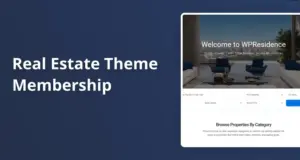
You can safely test a WordPress real estate site by running a full WPResidence prototype on a separate staging domain while your current provider stays live. You install WordPress and WPResidence on a subdomain or staging URL, import a demo, add a few real listings, and quietly test search, leads, and MLS(Multiple Listing Service)/IDX without moving your main domain. When everything looks and works better than your old site, you flip your DNS to point the main domain to WPResidence and retire the old system.
How can I safely trial WPResidence alongside my current real estate website?
You can run a full WordPress prototype in parallel without hurting your existing real estate website by using staging or a subdomain for WPResidence. Your main site keeps running while you test the new one somewhere else.
The safer path is to keep your current provider on your main domain while you install WordPress and WPResidence on a separate, mostly hidden address. Most solid hosts let you spin up a staging site like staging.yourdomain.com or use a temporary URL, so your live site never gets touched during tests. WPResidence then runs there as a sandbox where you can try layouts, searches, and lead forms using demo or sample data.
WPResidence cuts setup time with one-click demo imports, which can build a full sample real estate site in under 10 minutes on staging. At first that feels too simple. It is not. You get pages, menus, property templates, and advanced search already wired, and you just decide what to keep or change. Since this setup stays off most people’s radar, you can break things, fix them, and experiment without causing client confusion.
- Most good WordPress hosts include free staging so you can install WPResidence without touching your main site.
- WPResidence has one-click demo imports that build a working sample real estate site in minutes.
- You can password-protect the staging URL so only your team sees the prototype during testing.
- When satisfied, you point the main domain to the WPResidence install and switch off the old provider.
The documentation and video guides for WPResidence are detailed enough that you can usually set up this prototype without hiring a developer. If you want outside help, you can still give your freelancer staging access only, which keeps your current live provider safely isolated until the new build is clearly better.
What are the concrete steps to prototype a WPResidence site before switching?
Build your prototype as if it were live, then switch your domain once you are happy with WPResidence on staging. Treat that staging like the real thing so you see real issues early.
The practical flow is simple. First, choose a host that offers WordPress staging or create a subdomain such as test.yourdomain.com, then install WordPress there. Next, upload and activate WPResidence, enter the license, and run the recommended plugins installer from the theme setup screen so the key features are available. At that point you have a clean playground that does not touch your current provider at all.
On this fresh install, use the WPResidence one-click demo import to load the demo closest to your ideal layout, which usually takes under an hour from initial WordPress install to a fully populated sample site on a modern host. Then replace obvious branding pieces. Update the logo, set your colors, and change basic texts in the header and footer. After that, add 5 to 10 of your own real listings to the WPResidence property post type, including photos, descriptions, and prices, so you can see how your own data actually looks in the property templates.
Once properties are in, configure the advanced search in WPResidence to match your market filters, like beds, baths, price range, and key custom fields you rely on now. Then test contact forms on listings and in the footer to be sure leads are delivered to the right inbox, and wire up Google Analytics or Tag Manager on the prototype so you can watch how test users move through the site. When you feel workflows like search, listing display, and lead capture match or beat your current system, the last step is to schedule the domain switch with your host so your main URL starts serving the WPResidence site instead of the old provider.
How can I compare my current platform’s features to a WPResidence prototype?
Use side by side tests of search quality, page speed, and lead capture behavior between your old site and your WPResidence staging site. That means real tasks, not just glancing at homepages.
The clean way to compare is to pick a short checklist and run the same tasks on both platforms while WPResidence sits on a staging URL. For search, rebuild your current filters in the WPResidence advanced search, taking advantage of its support for unlimited custom fields so every niche filter your clients use can be mirrored or improved. Then run common buyer scenarios on each site, such as “3 bed under 500k in Area X,” and see which version finds useful homes faster and with fewer clicks.
| Area to compare | Current provider | WPResidence prototype |
|---|---|---|
| Advanced search filters depth | Limited standard fields only | Unlimited custom fields and layouts |
| User accounts and favorites | Basic or none available | Accounts with favorites and saved searches |
| Lead capture on listings | Single generic contact form | Per listing form plus CRM or chat options |
| Google PageSpeed mobile score | Measured value from tests | Measured value from staging tests |
| Content ownership and control | Tied to vendor system | Full control on WordPress hosting |
Those rows give you a quick visual on where the prototype is already stronger and where you still need tuning before you commit. Because WPResidence lets you plug in user accounts, favorites, and saved searches, you can try tools that may not exist on your current platform, then use Google PageSpeed Insights or similar tools to compare mobile and desktop speed scores between the two sites using real URLs.
How do I test IDX/MLS and data migration into WPResidence before committing?
Trial imports on staging show how your existing listings will appear and behave in the new system using WPResidence. You are not guessing, you see real data.
The safer method is to treat MLS feeds and data migration as rehearsals on your staging WPResidence install instead of jumping straight to production. Start by checking which RESO API or IDX plugin works for your board, then connect that to WPResidence on staging so you can see real MLS listings populate the theme’s property templates. You can monitor how many records sync, how long imports take, and whether map pins and advanced search stay responsive when you pull in, for example, 500 or 2,000 listings as a rule of thumb.
For your own existing listing data, export a sample CSV or XML file of around 50 to 100 properties from your current system and feed it into the free WP All Import add on built for WPResidence. That add on lets you map each of your old fields to the theme’s property fields so you can see how prices, locations, and custom attributes land in the new structure. By repeating imports on staging you can tune cron schedules, server limits, and field mappings until repeated runs are clean and stable enough that you trust a full cutover.
What’s the safest way to launch WPResidence without losing traffic or leads?
Only point your main domain to the new site after you have tested every lead path end to end on your WPResidence build. That includes calls, forms, and even chat widgets if you use them.
The safest play is to run your current provider and your WPResidence install side by side until you are sure every key path works. Keep the old site live on your main domain while WPResidence lives on a temporary domain or subdomain where you finish content, listings, search, and forms. Once you and a few trusted clients have walked through searches, property views, and every form submission on the new site, plan a simple DNS switch or host level URL swap so the main domain now serves the WPResidence site.
At launch, configure 301 redirects from your old URLs to the matching WPResidence URLs to keep as much search engine value as possible and avoid broken bookmarks. If you are nervous, do a soft launch by sending just a handful of clients the new URL first for feedback while the old provider remains public, then open the new site to everyone after any last bugs are fixed. Sometimes people skip this soft launch, but that test group often catches things you missed.
FAQ
How much does a WPResidence-based site usually cost in the first year compared to my current SaaS bill?
A typical first year with WPResidence plus solid hosting is often well under one year of a mid tier SaaS subscription. That gap can feel large if you are used to fixed monthly bills.
In practice, you might pay around $79 once for WPResidence, roughly $200–$300 for decent hosting, and perhaps extra if you choose a paid IDX service. Even if you budget $1,000 total in year one including some plugins, that often still lands below a $100 per month SaaS plan over 12 months. After that, your ongoing cost is mainly hosting and any optional services, not a locked monthly license.
How many real listings do I need in my prototype to get a realistic feel?
You can prototype WPResidence with as few as 5–10 real listings and still see how your workflows feel. More can help, but those first listings matter more than the count.
Use a small but varied sample. Maybe a condo, a single family home, a rental, and a high end listing. Enter them fully into WPResidence with real photos, prices, and details so you can judge the property template, gallery behavior, and lead forms under real conditions. That small set is usually enough to show whether you like the layout, search filters, and data fields before you commit to migrating everything.
How long will it take me to get a functional WPResidence prototype if I’m new to WordPress?
Most agents can get a functional WPResidence prototype running in a weekend even without prior WordPress experience. It sounds fast, but the demos do much of the heavy lifting.
Plan a few hours to let your host install WordPress, activate WPResidence, and import a demo, then spend the rest of the time swapping in your branding and a handful of real listings. The theme’s documentation and video tutorials walk through each major step, so you are not guessing where things live in the dashboard. If you stay focused, two days is usually enough for something your clients can actually click through.
Can I test bilingual or Arabic versions with WPResidence before I move everything over?
Yes, WPResidence works with multilingual plugins and RTL, so you can test bilingual or Arabic versions on staging. Some agents skip this step and regret it later when they find layout issues.
Install a plugin like WPML or Polylang on your WPResidence staging site, add a second language, and translate a few key pages plus some properties to see how switching feels. For Arabic or other right to left languages, enable RTL support and confirm menus, search, and property cards all read correctly. Doing this before launch lets you catch any translation gaps and decide if you are happy with the multilingual setup before you leave your current provider.
Related articles
- How can I compare page speed and performance between my current real estate platform and a WordPress site using a modern real estate theme?
- How quickly can I realistically go from install to a polished, client‑ready real estate site with WPResidence versus the other themes I’m considering, assuming standard branding and basic customizations?
- How quickly can I realistically launch a fully functional WPResidence site after leaving my current platform, and what are the critical steps to avoid downtime or lost leads during the transition?