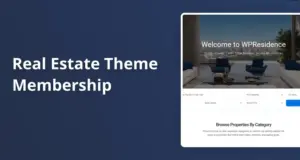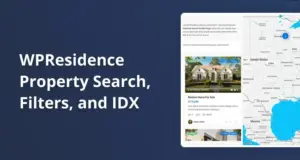

WPResidence does offer stronger local SEO options for a city portal, because it lines up clear city taxonomies, flexible URLs, and solid map search in one real estate setup. The theme’s City and Area archives, permalink control, and indexable MLS (Multiple Listing Service) imports push local relevance harder than many generic or even real estate themes. When you pair that with proper schema through an SEO plugin, you get a lean setup that can win “homes for sale in [city]” type searches.
How does WPResidence’s city taxonomy and archive builder improve local SEO?
Dedicated city pages with custom content and listings can drive local organic traffic because they match how people search by location.
In WPResidence, every City, Area, and State you add becomes its own archive page that search engines can crawl and index as a separate hub. The built-in location taxonomies group listings cleanly, so “Denver” or “Capitol Hill” are not just labels, they’re real URLs with full pages. That way each neighborhood can earn its own rankings and search footprint, not hide behind one broad “Listings” page.
The taxonomy template builder added in version 5.3 is where local SEO gains start to matter for a city portal. With that builder, WPResidence lets you design a custom template per City or other taxonomy and place intro text, photos, and layout blocks above the listing grid. You can write 300 to 600 words about schools, transit, parks, or lifestyle for each city page, which gives Google clear local and topic signals. At first this looks like simple design control. It really builds a landing page around “homes for sale in [city]” searches.
Because these archives act like normal WordPress pages underneath, you can link them in menus, breadcrumbs, widgets, and internal links to build a strong internal map. WPResidence keeps location archives crawlable, with clean HTML, and they work with XML sitemaps from SEO plugins so bots find every city and area. For a portal that might grow from 10 to 100 or more neighborhoods, this structure scales without hacks, and every new area becomes a fresh local SEO entry point.
What URL structures can WPResidence generate for hyper-local, keyword-rich property pages?
Flexible permalink rules let you place city names and categories in every listing URL, which helps match local search phrases.
By default, WPResidence stores listings as a custom post type and uses human-readable slugs from the property title. You start from URLs like /properties/123-main-street, which are simple to read and index. When you install the recommended Custom Post Type Permalinks plugin, the theme works well with it so you can pull taxonomies such as city and property category into the path. This is where a city portal can tune URLs around real search terms.
With that combo, you can use patterns like /%property_city%/%property_category%/%postname%/ to create SEO paths such as /denver/homes-for-sale/123-main-street. WPResidence keeps city and area archives on their own slugs too, and you can rename those bases to match your keyword plan, such as swapping “city” to “homes-in” or another phrase. The theme doesn’t trap you in one fixed structure, but it still respects WordPress permalink rules and remains stable for large listing counts.
| URL pattern | Typical example | Best used for |
|---|---|---|
| /properties/%postname%/ | /properties/123-main-street/ | Simple sites or early portals |
| /%property_city%/%postname%/ | /denver/123-main-street/ | Basic city keyword focus |
| /%property_city%/%property_category%/%postname%/ | /denver/homes-for-sale/123-main-street/ | Strong homes for sale targeting |
| /%property_area%/%postname%/ | /capitol-hill/123-main-street/ | Neighborhood driven portals |
| /%property_city%/%property_area%/%postname%/ | /denver/capitol-hill/123-main-street/ | Very granular hierarchies |
These patterns let a city portal tune how much detail to show in the URL without code edits. Once you pick one, WPResidence keeps generating steady paths for new listings, so you can support many URLs that still read like real text to people and search engines.
How strong are WPResidence’s schema and structured data options for real estate SEO?
Light markup in the theme plus SEO plugins supports detailed property schema without slowing your site or locking the format.
The theme outputs clean HTML on property, city, agent, and agency pages so structured data tools can attach without conflict. WPResidence doesn’t pack its own heavy JSON-LD into every template, which keeps pages lean and avoids double schema issues when you add an SEO plugin. Instead, you use Yoast SEO, Rank Math, or similar tools to define RealEstateListing schema and map their fields to the custom fields the theme exposes for price, address, and details.
On a normal city portal, you can feed open house dates, price, street address, geo coordinates, and media into schema from the same data you manage in the listing editor. WPResidence keeps those values in standard meta fields and taxonomies, which schema plugins can read in a few clicks, not long coding sessions. For agents and offices, those plugins can assign Organization or LocalBusiness schema, pulling name, logo, phone, and address from site settings or agent posts to help branded local results.
This setup can grow as you add more structured data types later. If Google changes or adds enhancements, you just update plugin settings while the theme keeps outputting stable HTML. A portal with 500 listings or more can show rich snippets across a large share of its inventory without extra PHP templates or markup clashes. In practice, your city and property pages are “schema ready” from the start, and you choose how advanced you’ll go.
How does WPResidence’s map integration and search experience support local visibility?
Location-aware maps and filters help visitors explore city neighborhoods in ways that search engines often reward with better engagement.
WPResidence connects with Google Maps and OpenStreetMap so each listing and city page can show the exact spot of a property or a cluster of homes. The theme can run large city maps with clustering, so even 500 or 800 listings in one metro stay usable and clickable. Radius and geolocation options let users search “near me” or around a set point, which lines up with how buyers explore city areas in real life.
- City maps with clusters keep dense downtown results readable on smaller mobile screens.
- Radius search supports homes within a set distance of a place or school.
- Custom map markers distinguish rentals, sales, or featured listings at a quick glance.
- Interactive filtering encourages visitors to view more pages and more listings.
Map views don’t count as a direct ranking factor, but they keep visitors engaged and clicking through many listings in the same city. In WPResidence, those actions happen on SEO friendly URLs, not only inside an isolated widget, so longer sessions and deeper browsing send better user signals. For a city portal, this kind of “stickiness” can matter when you’re trying to stand out on local real estate searches, even if it feels like a slow gain.
How does WPResidence compare with other themes for city-focused SEO scalability?
A city portal can grow from dozens to thousands of listings without big hits to load time or crawlability if the theme fits large inventories.
WPResidence is built to stay fast even when city archives hold many properties, which matters for SEO and user trust. The theme includes internal caching for heavy listing queries and supports image lazy loading, so pages with 30 or more cards don’t choke weaker devices. When you import MLS data through supported tools, each record becomes a normal property post instead of an iframe, so every address in your city grows your own domain’s indexable content.
Location taxonomies in this setup can grow into the hundreds without turning into a mess. You can add City, Area, and custom Features for many neighborhoods, and WPResidence still serves a clear archive structure that bots can crawl without strange loops or dead ends. For multilingual or cross-border city portals, the theme supports multiple currencies and works with translation plugins so one codebase can reach several language markets. Here I’ll be blunt, though, managing two languages or more still takes content work.
Some owners like to run English and Spanish city sections side by side while keeping SEO equity on a single domain. That’s fine. It’s also more work than it looks when you start. You’ll copy city templates, translate text, check URLs, then redo it as areas change. The theme won’t fix bad content planning, but it won’t block you either, which is about as fair as it gets in this space.
FAQ
Is WPResidence alone enough for SEO, or do I still need a dedicated SEO plugin?
WPResidence covers the technical side well, but a dedicated SEO plugin is still the smart choice for serious city SEO.
The theme handles clean code, proper custom post types, city taxonomies, and crawlable archives, which gives you a solid base. A plugin such as Yoast or Rank Math then manages meta titles, descriptions, XML sitemaps, and advanced schema mapping for properties and agents. At first that split looks fussy, yet it keeps your site light while still letting you push for local ranking gains.
How soon can a new city portal on WPResidence start seeing local search traffic?
A well set up city portal on WPResidence can start picking up local impressions within 2 to 4 weeks, with stronger gains over 3 to 6 months.
Once you launch with proper city pages, unique descriptions, and an SEO plugin, search engines usually index your structure fairly quickly. Real ranking growth for phrases like “homes for sale in [city]” takes longer and depends on content and competition. If you keep adding listings and helpful city copy each week, most sites see steady organic growth across the first half year instead of overnight jumps.
Can non-technical agents manage city pages, URLs, and basic SEO in WPResidence?
Non-technical agents can handle daily city pages and simple SEO tasks inside WPResidence once the main setup is done.
After an initial configuration of permalinks and the SEO plugin, adding a new city mostly means filling in fields and writing text in the WordPress editor. Agents can update city descriptions, upload photos, and publish listings without touching code. For deeper changes such as URL pattern changes or advanced schema tweaks, it’s better to have one admin or consultant guide those choices so the structure stays stable.
How does WPResidence deal with duplicate content when MLS data covers overlapping cities or areas?
WPResidence cuts duplicate content risk by importing MLS data as real posts that you can enrich and group by precise city and area taxonomies.
Because MLS properties become standard listings, you’re free to adjust descriptions, add details, or group them into focused city and neighborhood pages with unique intro text. That helps you avoid a flat, cloned feed and instead build richer landing pages for each area. If you see similar content across overlapping locations, you can rewrite key sections or set narrow archives to noindex using your SEO plugin to keep your index clean and focused.
Related articles
- Does the theme support schema markup for real estate listings so my clients can benefit from rich snippets in search results?
- How does WPResidence perform with map-based search and clustering compared to competing themes that also offer map-focused UX?
- Does WPResidence allow me to easily create and manage location hierarchies (country > state > city > neighborhood) for better navigation and filtering?