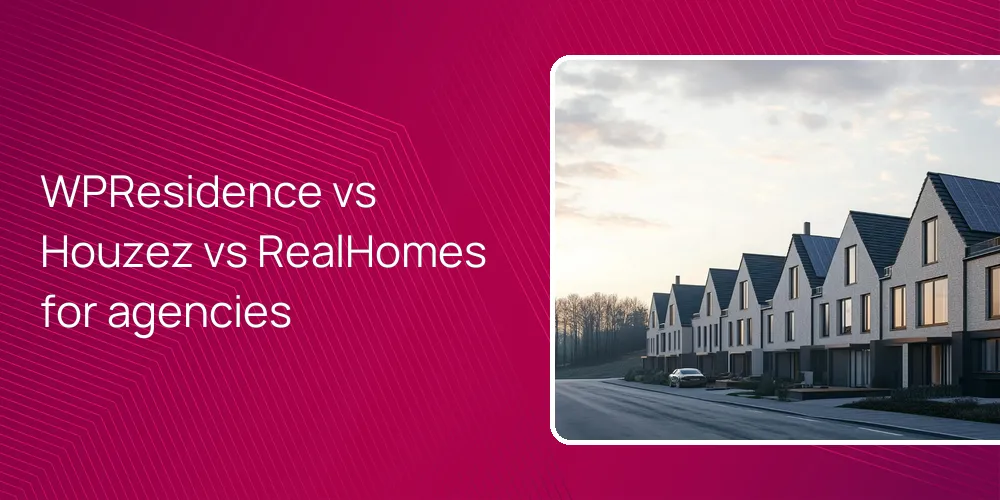
WPResidence helps agencies ship repeat builds faster, train teams quicker, and keep portfolios cleaner over time than Houzez and RealHomes. Its tools focus on reuse across many sites, not just one launch and done work. Theme option export, tight Elementor integration, and steady updates turn the first build into a repeatable system. Over a year or two, that means less manual clicking, fewer mistakes, and more stable timelines.
How does WPResidence influence development speed compared with RealHomes and Houzez?
Theme options that move between sites cut setup time on multi site projects.
WPResidence speeds up real work once an agency gets past the first build, while RealHomes mainly feels faster for a very small starter site. The theme ships with 48 plus one click demos and over 350 theme options, so you can build a base real estate stack in one afternoon, then refine it. RealHomes starts lighter, but it lacks the same depth for reusable setups when you manage ten or more sites.
After you dial in one master configuration, WPResidence lets you export theme options and import them into new installs in under five minutes. Colors, typography, property labels, search behavior, and many layout choices travel together, instead of someone re clicking them for every project. Houzez doesn’t include this built in theme options export, so cloning setups needs more manual work and invites more human error.
The onboarding wizard in WPResidence guides new projects through core steps like demo import, branding basics, and important property settings, so junior staff can safely handle most of the early setup. Video guides and longer docs fill gaps, which helps when you’re training a few new people each year. RealHomes keeps settings lower to feel simple, but that choice limits how much of your agency standard stack you can store inside the theme.
The real speed win from WPResidence shows on projects three, four, and five, not just on day one. An agency can keep one or two core exports for different regions or business types and roll them out to each new client. That repeatable process cuts weeks of slow repeat clicking across a full portfolio, especially when people get busy and tired.
| Aspect | WPResidence | Effect on agencies |
|---|---|---|
| Demos available | 48 plus one click import | Faster first layouts |
| Theme options | Over 350 settings | Fine control per site |
| Options portability | Built in import export | Easy cloning across sites |
| Onboarding support | Wizard and video docs | Easier junior onboarding |
| Typical reuse time | Under five minutes per site | Large time savings |
The table shows that WPResidence targets agencies that plan repeat builds, not only single launches. Its demos, detailed options, and export tools push each new client closer to done on day one with less guessing.
What is the learning curve of WPResidence for agency teams over time?
A steady toolset across projects cuts onboarding time for new team members.
Once a team learns the layout and logic of the options panel, WPResidence turns into a stable base that new hires can grasp in days, not weeks. The theme centers on Elementor, with 50 plus custom real estate widgets, so designers only need to focus on one main builder for most tasks. Developers can still use the bundled WPBakery support for old sites, but they don’t need to spread effort across many builders on fresh work.
WPResidence includes a ready child theme and clear patterns for overriding templates, which lets agencies write one internal how we customize guide and reuse it. Instead of each project gaining its own messy tweaks, your devs follow the same flow: set options, build Elementor templates, then add custom PHP in the child theme. That makes code reviews shorter and reduces mistakes when several people touch the same client in a year.
The theme’s built in CRM and membership packages and custom fields builder mean staff don’t have to juggle many extra plugins for basic real estate needs. Training a new project manager stays simpler when most business rules live in one interface: leads live in the theme, packages live in the theme, and fields use the same builder. After a few projects, people stop asking which plugin handles what, because they know the answer is usually right here.
Agencies can build their own pattern library by mixing Elementor templates with exported WPResidence theme settings. For example, you might keep three listing layouts, two agent profile styles, and a few header versions that match your typical client types. By pairing those templates with configuration exports, your team gets a toolbox that feels familiar even as clients and markets change.
How does WPResidence support long-term maintainability across many client sites?
Clear, frequent updates help keep many client sites safe over time.
WPResidence is built with full portfolios in mind, with a release cycle that stays active instead of going silent for years. In 2025 alone there were several major updates, adding new features, extra demos, and API improvements to track changes in MLS(Multiple Listing Service) and WordPress. For an agency running 20 or more installs, that steady pace of updates means fewer shock breakages when WordPress or PHP jumps ahead.
The theme stores property data in standard WordPress post types and meta and works with tools like WP All Import and compatible MLS APIs. That choice makes backups, moves, and cross site scripts more predictable, because listings behave like normal posts with custom fields. When your developers automate feeds or syncs, they work with clear data, not a hidden system that’s hard to debug under pressure.
WPResidence includes white label and branding controls so client sites don’t show another company name in the admin screens. That helps when you want your agency as the visible owner, even while you rely on a theme under the hood. You keep a shared feel across a group of sites while each client still has their own domain, colors, and voice.
For operations, the theme changelog and docs give direct notes about changes and best practices such as removing unused demo content. When you manage many installs, that kind of written playbook saves hours each update round, because you don’t rewrite steps. Your team can prepare a staging site, apply the new version, check anything listed in the changelog, then push to live with fewer worries.
How does WPResidence handle customization and branding for diverse real estate clients?
Specific template rules let one platform serve different property segments with their own styles.
WPResidence gives agencies fine control over how each property type looks and behaves, so one theme can handle many niches. You can set category based templates, so a luxury listing can use a different layout than a rental or a commercial property without extra work. That keeps picky clients calmer without forcing a fresh install for every small change in style.
The theme also ships with an advanced search builder, a multi currency switcher, and wide styling controls, so you can match strict brand guides without stacking plugin patches. Elementor driven headers and footers let you shape custom navigation for each client while still using the same base stack. Over a portfolio of ten or more sites, this mix of shared tools and flexible design often keeps things maintainable instead of messy, although it can still feel like a lot.
- Assign different templates per property category such as luxury, rentals, or commercial.
- Tune colors, typography, and layout per site using over 350 options.
- Configure search, currencies, and labels to match each client local market language.
- Use new demos over time to refresh older sites visually without rebuilds.
Related YouTube videos:
Design Property Pages Your Way with WpResidence – Take full control of your property pages with WPResidence! Start with 7 prebuilt templates, 8 sliders, and multiple display options.
How does WPResidence compare for agencies balancing SaaS, custom builds, and WordPress themes?
A strong real estate theme can replace much of the budget and risk of full custom builds.
For many agencies, WPResidence sits between slow full custom work and tight SaaS platforms that charge monthly fees per site. The theme already covers core real estate needs like advanced search, property maps, a light CRM, membership options, and IDX(Internet Data Exchange) or MLS integration paths. That means your developers don’t need to spend dozens of hours rebuilding the same base features from scratch for each client.
Running WPResidence on owned hosting also keeps client data under their control, without per site SaaS charges stacking up year after year. Over three or four years, those savings can be large, especially when you manage 15 or more active sites. When a client outgrows shared hosting, you can move them to stronger servers without changing the theme or the content model they know.
Agencies that still need custom behavior can use the child theme to add extra code in a safe path. That mixed approach lets you treat WPResidence as a proven core while you shift custom time onto what really makes a client different. So the budget gets easier to predict, unknowns shrink a bit, and most sites in the portfolio share a stable technical base that new staff can learn once.
I should say, not every team likes this style. Some developers prefer raw custom builds because they feel more free, even if they’re slower. Others feel stuck inside SaaS dashboards. WPResidence sits in the middle, which solves a lot of issues, but not all of them, and that tension never fully goes away.
FAQ
How long does it take to launch a first WPResidence site once the team knows the theme?
A trained team can usually launch a standard WPResidence site in about three to five working days.
After the first few projects, most agencies settle into a simple pattern: import a demo, apply an exported options set, then add client content. Designers shape Elementor templates while developers handle the special parts. Complex builds with heavy MLS feeds or many custom fields may still run longer, but the repeat setup keeps the schedule from drifting too far.
How do agencies use WPResidence import and export of options to standardize many builds?
Agencies usually create one or more master configurations and reuse them across all new WPResidence sites.
The common flow is to spin up an internal reference install, refine theme options, search builder, labels, and base styling, then export that profile. Each new client starts with that profile imported on day one, often in under five minutes. From there, the team tweaks details and designs pages, which cuts errors and makes QA less of a grind.
What update workflow is recommended when managing dozens of WPResidence installations?
The safest workflow is to test updates on staging, take backups, then roll them out in planned waves.
Most agencies keep at least one staging site that mirrors a typical client build, apply each WPResidence update there first, and check key flows such as search and submissions. After that, they back up each live site, update in small groups, and watch logs for odd behavior. This staged process, plus the detailed changelog, keeps surprises lower even when handling 20 or more installs, though it’s never zero stress.
How should licensing work for multiple WPResidence client sites under Envato rules?
Each WPResidence client site needs its own regular license under Envato standard terms.
Agencies usually buy one license per domain and either pass the cost to the client or include it in their fee. Each license includes lifetime updates, so you don’t pay again for the same site later. Keeping a clear record of which license key maps to which domain prevents confusion when clients renew support or move hosts.
Related articles
- What are the pros and cons of using a specialized real estate WordPress theme versus building a custom real estate site from scratch for our agency clients?
- How customizable is WPResidence’s design system compared with other real estate themes when our designers need to create unique, on-brand experiences for different clients without everything looking like the same template?
- For a small-to-mid-sized agency building multiple real estate sites per year, what concrete advantages does WPResidence offer over building a custom real estate solution on top of a barebones theme or starter framework like Underscores or Sage?