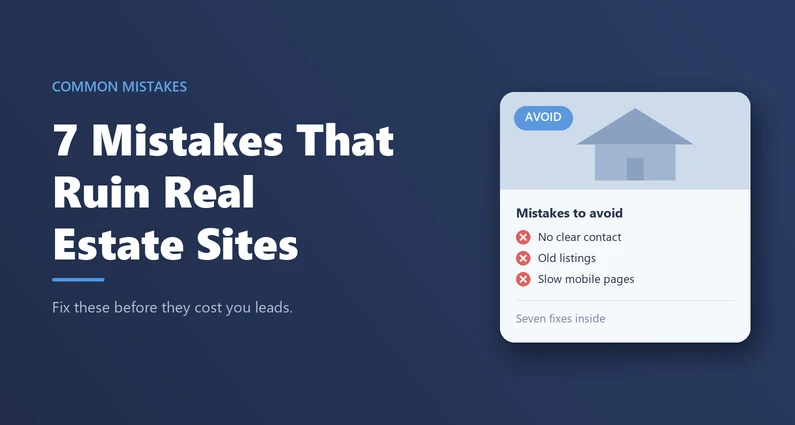
If you’re a real estate agent wrestling with low lead conversion rates on your website, it might be time to rethink your strategy. The issue often lies not in adding more elements but in stripping away those that confuse or scare off visitors. An optimized site keeps users engaged longer and boosts the likelihood of them converting into clients.
With my several years of expertise in web design and SEO, I’m here to guide you on seven things you need to remove from your real estate website for better performance. Trust me, these simple adjustments can make a massive difference.
Chaotic Color Schemes
A vibrant color palette can make a website visually appealing, but too many clashing colors can overwhelm and disorient users. It’s crucial to narrow down your scheme to four colors: three neutral ones (think white, grey, or cream) and one accent color. This streamlined approach ensures that important elements stand out, catching your visitors’ attention where it matters most. For instance, a simple green button on a primarily white background can be a powerful call-to-action element.
Using a consistent color palette not only helps visitors navigate your site but also reinforces your brand identity. There are plenty of resources available for choosing aesthetically pleasing color schemes; for example, Canva offers a collection of designer-approved palettes. By focusing on this seemingly small detail, you significantly improve user experience and engagement.
Overly Complex Menus
Navigational ease is key in retaining visitors. A complicated menu layout makes it difficult for users to find what they’re looking for and often results in higher bounce rates. Aim for a maximum of five primary menu items that guide users towards essential actions, such as ‘Buy with Us’ or ‘Sell with Us.’ Dropping traditional home or contact links from the main menu can declutter the space while dropdown menus for additional resources like blogs or guides can further simplify navigation.
Studies show that straightforward navigation systems reduce bounce rates significantly and enhance user satisfaction. Streamline your menu options, ensuring that they serve a purpose directly linked to conversion activities.
Avoiding Professional Jargon
The language you use on your website should resonate with visitors by addressing their specific needs in a clear, relatable manner. Phrases like “Number One Real Estate Agent” are meaningless if they don’t solve a potential client’s problem. Instead, focus on how your services make the home buying or selling process smoother and more efficient for them.
Avoid jargon like ‘CMA’ which may confuse potential clients. Instead, use simple terms such as ‘Home Valuation Report.’ Being straightforward about what you offer can greatly enhance user understanding and engagement.
Ditch Traditional Contact Forms
Rather than relying solely on traditional contact forms that may lead to delays and lost leads, consider using scheduling tools like Calendly. These allow prospective clients to book appointments directly through your site without any back-and-forth emailing.
An optimized contact system improves not only user experience but also operational efficiency, ensuring leads are swiftly converted into appointments. Providing immediate scheduling options indicates your readiness to help and enhances the client experience.
Banish Social Media Icons from the Header
While linking to your social media is essential, placing these icons at the top of your page encourages visitors to leave prematurely. Instead, place social media links in the footer where they are accessible but not distracting from primary actions on the site.
This strategy helps retain user attention and reduces bounce rates while still offering an avenue for visitors who want to explore your social profiles later on.
Stay Away from Overused Stock Photos
The authenticity of visuals plays a significant role in user perception and trustworthiness of your site. Refrain from using common stock photos that people have seen repeatedly across different platforms. Authentic images—preferably showcasing you, your team, or even local landmarks—add credibility.
According to recent data, authentic visuals enhance trust and are much more engaging compared to generic stock photos. The key is creating an emotional connection with visitors through real-life visuals.
Simplify Bios and About Pages
A detailed bio page is good practice but shoving long-winded introductions down every visitor’s throat is counterproductive. Keep introductory information concise on the homepage and provide links to full bios if readers want more details.
Highlighting essential qualifications in short bursts can intrigue potential clients enough to want to learn more about you via an ‘About Us’ link, keeping the focus initially on what you can do for them rather than an exhaustive life history.
Your real estate website should function as an effective tool for engaging users and turning traffic into leads. Focus on making it streamlined and user-centric: adopt a simpler color scheme; ensure easy navigation; speak in relatable terms; replace static forms with instant booking options; demote social media links; use authentic visuals; and simplify introductory texts.
If you implement these adjustments, you’ll likely see higher user engagement, lower bounce rates, and more conversions—helping transform traffic into clients who trust and choose you as their go-to real estate professional.
FAQ
How many colors should a real estate website use to avoid looking chaotic?
Keep your palette tight: aim for four colors total-three neutral colors (such as white, grey, or cream) and one accent color.
This makes the site easier to scan and helps key elements stand out. For example, an accent-colored button on a mostly neutral background can function as a clear call to action without overwhelming visitors.
What is a simple, conversion-focused menu structure for a real estate website?
Limit your main navigation to a maximum of five primary menu items and make sure each one supports an essential action, such as “Buy with Us” or “Sell with Us.”
To declutter, keep secondary content (like blogs or guides) under dropdowns. The goal is to make it effortless for visitors to find what they need without getting lost, which helps reduce bounce rates.
What kind of wording should real estate agents avoid on their website, and what should they use instead?
Avoid professional jargon and vague claims that do not help the visitor, such as “Number One Real Estate Agent” or acronyms like “CMA” that may be unfamiliar.
Use simple, problem-solving language that clearly explains what you offer. For instance, replace “CMA” with a plain-English label like “Home Valuation Report” and focus on how you make buying or selling smoother for the client.
Should I replace traditional contact forms on my real estate website?
If your goal is faster lead conversion, do not rely only on traditional contact forms that can create delays. Instead, add an appointment scheduling tool (such as Calendly) so prospects can book directly without back-and-forth email.
This creates a smoother experience for visitors and helps you convert interested traffic into actual appointments more quickly.
Where should social media links and agent bios go so they do not distract visitors?
Move social media icons out of the header, because placing them at the top of the page encourages visitors to leave your site early. Put social links in the footer where they remain available but do not compete with primary actions.
Likewise, keep bios and About content concise on the homepage. Share key qualifications briefly and link to full bios for readers who want more detail, so the initial focus stays on what you can do for the visitor.