In the fast-paced world of real estate, agents often find themselves overwhelmed by the myriad of tools and products promising quick leads and closed deals. This phenomenon, known as ‘shiny object syndrome,’ leads many to invest in expensive solutions that fail to deliver. One such tool is the sales funnel. While funnels are widely successful in other industries, their application in real estate requires a nuanced approach. As a WordPress professional, it’s essential to understand how to implement these funnels effectively within your website to maximize lead generation and conversion. This article will demystify real estate funnels, explore their practical applications, and provide actionable insights to enhance your WordPress site.
What Exactly is a Funnel?
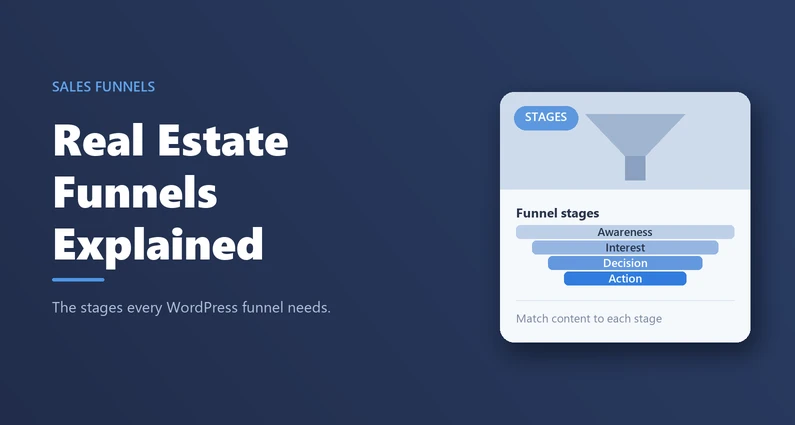
A funnel, at its core, is merely a web page designed to guide users through a series of steps toward a specific goal, such as making a purchase or signing up for a service. Unlike traditional websites with multiple navigation options that can distract visitors, funnels streamline the user journey by removing unnecessary links and focusing on one primary conversion goal. This singular focus helps minimize distractions and keeps visitors on track to complete the desired action.
In real estate, funnels can be particularly useful for capturing and nurturing leads. For example, when potential buyers visit your site, they might be looking for property listings or valuation services. A well-designed funnel will guide them through these stages without diverting their attention elsewhere.
The Real Estate Funnel Misconception
Many real estate agents fall into the trap of believing that funnels alone can generate traffic. However, this is a common misconception. Funnels do not inherently generate traffic; they only process it. In other words, you need to direct traffic to your funnel through other means such as paid ads, social media campaigns, YouTube videos, or blog articles.
Once visitors arrive at the funnel, its job is to guide them through a series of steps designed to convert them into leads and eventually clients. Therefore, while funnels are valuable tools for processing traffic, they are not standalone solutions for generating it.
Effective Funnel Implementation in Real Estate
For a funnel to be effective in real estate, it must be integrated seamlessly into your existing website. This integration ensures that all elements work harmoniously together to drive lead capture and conversion. Here’s how you can achieve this:
- Create Specific Landing Pages: Design landing pages tailored to different stages of the buyer’s journey. These could include pages for downloading buyer guides, booking consultations, or viewing property listings.
- Capture Lead Information: Use forms on these landing pages to capture essential lead information such as name, email address, and phone number. Ensure you have a mechanism in place to verify this information before providing access to valuable resources.
- Automate Follow-Up Processes: Implement automated follow-up processes using tools like Zapier to ensure leads are nurtured effectively throughout their journey.
The Role of IDX Websites
Internet Data Exchange (IDX) websites play a critical role in the real estate industry by providing up-to-date property listings directly from the Multiple Listing Service (MLS). These websites allow potential buyers to search for homes based on their criteria and preferences.
Despite their importance, IDX websites are often underutilized due to poor lead capture mechanisms. To optimize an IDX website:
- Enable Forced Registration: Ensure that visitors must register before accessing detailed property information. This step helps capture valuable lead data.
- Embed Contact Forms: Place contact forms strategically throughout your site to encourage visitors to reach out for more information or schedule consultations.
- Integrate with CRM Systems: Use tools like Zapier to automatically sync captured leads with your Customer Relationship Management (CRM) system for efficient follow-up.
Combining Funnels and IDX Websites
An effective real estate website combines the strengths of both funnels and IDX integration. Here’s how you can achieve this synergy:
- Create Dedicated Buyer Funnels: Design buyer-specific funnels that guide visitors from initial interest through various stages such as pre-approval forms, property searches, and consultation bookings.
- Develop Seller Funnels: Similarly, create seller-specific funnels that offer home valuation services, seller guides, and consultation scheduling options.
- Leverage Local SEO: Optimize your website content for local search terms related to real estate in your area. This strategy will help attract organic traffic from potential buyers and sellers searching for relevant information online.
The Importance of Social Proof
Social proof plays a significant role in building trust with potential clients. Include testimonials from satisfied clients prominently on your website. Consider embedding Google Business reviews or using built-in testimonial widgets that automatically update with new reviews.
Additionally, showcase any awards or recognitions you’ve received as a real estate professional. These accolades reinforce your credibility and expertise in the field.
Personal Branding
Your personal brand as a real estate agent is crucial for attracting and retaining clients. Ensure that your website prominently features high-quality photos of yourself along with detailed information about your background and expertise.
Avoid relying solely on stock photos; instead, use authentic images that reflect your personality and professionalism. Use language that addresses potential clients’ pain points directly—show them how you can solve their problems rather than just listing your qualifications.
A Complete Website Solution
An all-in-one website solution should encompass multiple elements working together seamlessly:
- Diverse Lead Capture Methods: Implement various lead capture methods tailored to different stages of the buyer’s journey (e.g., guides downloads).
- Integrated IDX Feed: Ensure seamless integration of IDX feeds within your website so visitors can easily access property listings without leaving your site.
FAQ
Do real estate funnels generate traffic on their own?
No. A funnel does not inherently generate traffic; it only processes the traffic you send to it. To get visitors into a funnel, you need separate traffic sources such as paid ads, social media campaigns, YouTube videos, or blog articles, and then the funnel’s job is to guide those visitors toward a specific conversion action.
What makes a funnel different from a traditional real estate website page?
A funnel is a web page (or sequence of pages) built around one primary conversion goal, with unnecessary navigation removed so visitors are not distracted. Traditional websites often include multiple links and paths that can pull people away from the action you want them to take; funnels intentionally streamline the journey so users stay focused on steps like downloading a guide, requesting a valuation, or booking a consultation.
What are practical ways to implement a real estate funnel on a WordPress site?
Start by creating specific landing pages matched to different stages of the buyer or seller journey, such as a page for downloading a buyer guide, booking a consultation, or viewing listings. Add forms to capture essential lead information like name, email, and phone number, and put a verification mechanism in place before providing access to valuable resources. Then automate follow-up so leads are nurtured consistently, for example by using Zapier to connect form submissions to your follow-up and lead management processes.
How can an IDX website capture more leads instead of just showing MLS listings?
IDX websites are valuable because they provide up-to-date listings from the MLS, but they often underperform when lead capture is weak. Improve lead capture by enabling forced registration so visitors must register before seeing detailed property information, embedding contact forms throughout the site to prompt inquiries and consultation requests, and syncing captured leads into your CRM using a tool like Zapier for efficient follow-up.
What does it look like to combine funnels and IDX on one real estate website?
Use funnels to guide visitors into focused actions, and use IDX to support the property search experience without sending people away. In practice, this means building dedicated buyer funnels that move users from initial interest to steps like pre-approval forms, property searches, and consultation bookings, while also creating seller funnels for home valuations, seller guides, and scheduling. To keep the funnel full, also optimize content for local SEO so you attract organic traffic from buyers and sellers searching for real estate information in your area.