Having an online presence is no longer optional for businesses and professionals. But how much should you budget for a website in 2025?
Whether you’re a solopreneur launching your first site or a growing business upgrading your digital storefront, understanding the costs involved helps you make informed decisions.
This guide breaks down the expenses of creating and maintaining a website today – from DIY solutions to custom enterprise platforms.
Website Development Approaches: Finding Your Path
Your choice of development approach fundamentally shapes your website budget. Here are the main options available:
DIY Website Builders
Website builders offer accessibility and affordability for those with limited technical skills or budget constraints. Depending on the features chosen, monthly costs typically range from free to $500.
Popular e-commerce platforms start around $39 monthly for new online stores. The advantage? These solutions generally include hosting, domain names, SSL certificates, and pre-designed templates – everything you need in one package.
While perfect for small businesses or personal sites, these platforms may limit customization compared to other approaches.
Content Management Systems (CMS)
WordPress and similar CMS platforms provide a middle ground between simple builders and complex custom development. While initial setup costs can be relatively low, various components contribute to the total:
Depending on traffic needs, hosting costs between $2 and $80 monthly. Domain registration runs about $10-20 annually for standard domains. Themes range from free to $100 for professional designs. Additional plugins might cost anywhere from nothing to $200 each, while e-commerce functionality can add $0-100+ monthly.
CMS solutions offer greater customization potential than website builders but require more technical knowledge for optimal results.
Professional Web Development
Custom-built websites with specific requirements represent the high end of the cost spectrum. Depending on complexity and features, agency or freelancer development ranges from $1,000 to over $145,000.
Web developers average $61-80 hourly, with projects potentially requiring significant time investments. Custom design and development for complex implementations typically costs $2,000 but can exceed $20,000. Professional design services with ongoing support might begin at around $8,000 monthly.
This approach provides maximum flexibility and unique branding opportunities but comes with costs.
Essential Website Costs Breakdown
Domain Registration
Your domain name represents your digital address and identity. Standard .com domains typically cost $10-20 annually for registration and renewal. Country-specific domains like .uk or .us run between $10-50 yearly, while newer extensions like .shop might cost $15-100+ annually.
Specialty domains command premium prices, with extensions like .inc potentially costing $350 initially and $2,499 for renewals. Domain costs have remained relatively stable in recent years.
Web Hosting
Hosting services store your website files and make them accessible online. Shared hosting ranges from $5-250 monthly, while managed hosting costs more but includes additional services like automatic backups and enhanced security.
E-commerce or high-traffic websites typically require more robust hosting solutions at higher prices. While budget options exist, inadequate hosting often leads to poor website performance and security vulnerabilities.
Design and Development
The visual appearance and functionality of your website represent significant initial investments. Pre-built themes cost $0-200 for template-based designs, while custom design services average around $30 hourly.
Development costs vary by pricing model: hourly rates ($60-80 per developer hour), flat project fees, tiered package rates, or retainer arrangements. Rushed projects typically demand premium pricing, with weekend or urgent work potentially doubling standard rates.
Security Features
Website security has become increasingly critical. SSL certificates range from free to $200 annually, though many hosting providers now include them at no additional cost. Additional security features like firewalls, malware scanning, and backup solutions may add $100-500+ annually, depending on the protection level required.
E-commerce Considerations
Due to additional functionality requirements, online stores typically cost more than informational sites. The average cost for new e-commerce stores using popular platforms is approximately $39 monthly.
Platform costs range from $20-300 monthly for hosted e-commerce solutions, while custom e-commerce development starts at $500 but can exceed $3,000 depending on scale and complexity.
E-commerce sites require specialized features like secure payment processing, inventory management, shipping integration, and often product photography services, contributing to higher overall costs.
Ongoing Maintenance: The Hidden Cost
Many website owners underestimate maintenance expenses. Professional maintenance ranges from $3,600 to $50,000 annually, while self-maintained sites using website builders might cost $0 to $5,400 annually.
Specific maintenance costs vary by website type:
- Small to medium business websites: $35-500 Monthly
- Complex multimedia sites: $300-2,500 Monthly
- Corporate websites: $200-4,500 Monthly
Maintenance includes regular updates, security patches, content refreshes, backup management, and technical support. Neglecting these aspects can lead to security vulnerabilities and functionality issues over time.
Factors That Influence Your Website Budget
Website Complexity
The number of pages, interactive elements, and custom features directly impact cost. Simple informational websites (5-10 pages) represent the lower end of cost ranges, while complex websites with custom functionality, user accounts, or specialized features increase expenses substantially.
Enterprise-level websites with multiple integrations, advanced security needs, and custom workflows command premium pricing.
Design Requirements
Design complexity and originality significantly affect your budget. Template-based designs provide cost savings but less uniqueness, while custom designs require more time and expertise. Advanced visual elements like animations, video integration, or interactive features add to design expenses.
Technical Needs
Specialized technical requirements drive costs higher. These might include database integration, third-party API connections, custom application development, advanced security or compliance requirements, and performance optimization for high-traffic sites.
Time Constraints
Deadline pressures significantly impact pricing. Rush projects typically command 1.5-2x standard rates, while weekend or urgent work may require premium pricing. Realistic timelines allow for more competitive pricing.
Real Estate Website with WPResidence Theme
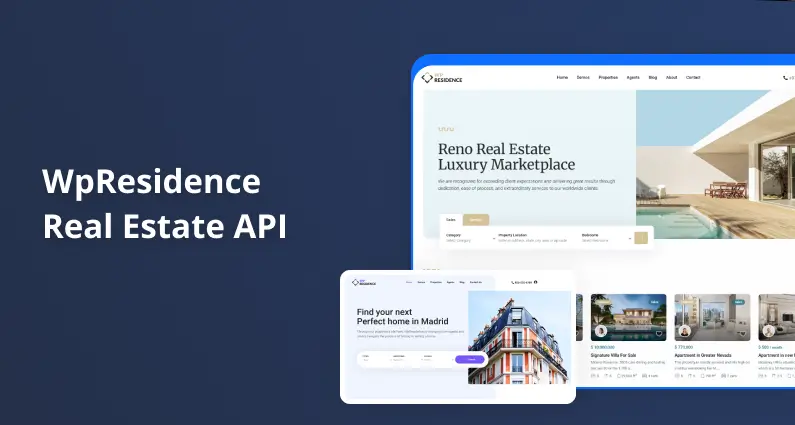
For real estate professionals seeking a specialized WordPress solution, a website built with the WPResidence theme represents a cost-effective middle ground. The theme costs $79 for a single-site license, with annual renewals around $30-50 for continued support and updates.
Factor in WordPress hosting ($10-50 monthly), domain registration ($10-20 annually), and essential plugins for real estate functionality like IDX integration ($50-200 monthly). Depending on your requirements, initial setup with basic customization by a WordPress specialist might cost $500-2,000.
The total first-year investment typically ranges from $1,000-3,500, with ongoing annual costs of $800-2,500 for hosting, theme updates, plugin renewals, and routine maintenance. This solution provides robust real estate features like property listings, agent profiles, advanced search, and mapping capabilities without the higher costs of fully custom development.
The Bottom Line:
Website costs in 2025 span from under $100 annually for basic DIY solutions to $145,000+ for comprehensive custom development. The appropriate investment depends on your specific needs, goals, and resources.
Small businesses and individuals can create effective online presences using website builders or moderate-cost CMS implementations, typically spending between $500-5,000 annually, including maintenance.
Growing businesses with more specific needs may require a $5,000-$20,000 initial investment and ongoing maintenance costs of $1,000-$5,000 annually.
Enterprise-level websites with complex functionality may require an initial investment of $20,000-145,000+, with significant ongoing maintenance expenses.
When budgeting for your website, consider the initial development costs and ongoing expenses for hosting, maintenance, security, and regular updates. The true cost of ownership extends beyond the initial build, making it essential to plan for long-term website management as part of your overall digital strategy.
FAQ
How much does it typically cost to build a website in 2025?
In 2025, website budgets span a wide range depending on what you build and how you build it. Basic DIY solutions can cost under $100 annually, while comprehensive custom development can exceed $145,000.
For many small businesses and individuals, an effective site built with a website builder or a moderate CMS setup typically lands around $500-5,000 annually including maintenance. Growing businesses often invest $5,000-$20,000 upfront with $1,000-$5,000 per year for ongoing maintenance, while enterprise sites commonly start around $20,000 and can run $145,000+ with significant ongoing costs.
What costs should I plan for beyond the initial website build?
Plan for recurring costs like domain registration, hosting, security, and maintenance. Domains are commonly $10-20 per year for a standard .com (with other extensions varying), and hosting can range widely (for example, shared hosting is cited at $5-250 per month, with managed hosting costing more).
Ongoing maintenance is often the most underestimated expense. Professional maintenance is described as $3,600-$50,000 annually, while self-maintained sites using website builders may run $0-$5,400 annually. Maintenance typically covers software updates, security patches, backups, content refreshes, and technical support.
How do website builders compare to WordPress/CMS and custom development on cost?
DIY website builders are positioned as the most accessible option, with monthly costs typically ranging from free to $500 depending on features. Many builder plans bundle hosting, a domain, SSL, and templates, which can simplify budgeting but may limit customization.
WordPress and other CMS platforms can start relatively low but add up across hosting ($2-$80 per month depending on traffic), domain registration ($10-20 per year for standard domains), themes (free to $100 for professional designs), plugins ($0-$200 each), and e-commerce add-ons ($0-$100+ per month). Custom professional development sits at the high end: projects are cited from $1,000 to $145,000+ depending on complexity, with developer rates averaging $61-$80 per hour and custom design/development for complex implementations typically starting around $2,000 and potentially exceeding $20,000.
What makes an e-commerce website cost more than an informational site?
E-commerce sites usually cost more because they require additional functionality and ongoing services beyond basic pages. The article highlights needs such as secure payment processing, inventory management, shipping integration, and often product photography, all of which add to scope and cost.
For budgeting, hosted e-commerce platforms are described at roughly $20-$300 per month (with an average around $39 per month for new stores on popular platforms). If you go custom, e-commerce development is noted as starting around $500 and potentially exceeding $3,000 depending on scale and complexity.
What does a real estate website cost using the WPResidence WordPress theme?
A real estate website built with the WPResidence theme is presented as a cost-effective middle ground between basic builders and fully custom development. The theme is listed at $79 for a single-site license, with annual renewals around $30-50 for continued support and updates.
Typical additional costs include WordPress hosting at $10-$50 per month, domain registration at $10-20 per year, and real estate plugins such as IDX integration at $50-$200 per month. With initial setup and basic customization by a WordPress specialist estimated at $500-$2,000, the total first-year investment is described as about $1,000-$3,500, with ongoing annual costs of $800-$2,500 for hosting, theme updates, plugin renewals, and routine maintenance.